Suburban Reinvention: How America's Forgotten Office Parks Are Becoming the Neighborhoods of Tomorrow
Suburban Reinvention: How America's Forgotten Office Parks Are Becoming the Neighborhoods of Tomorrow
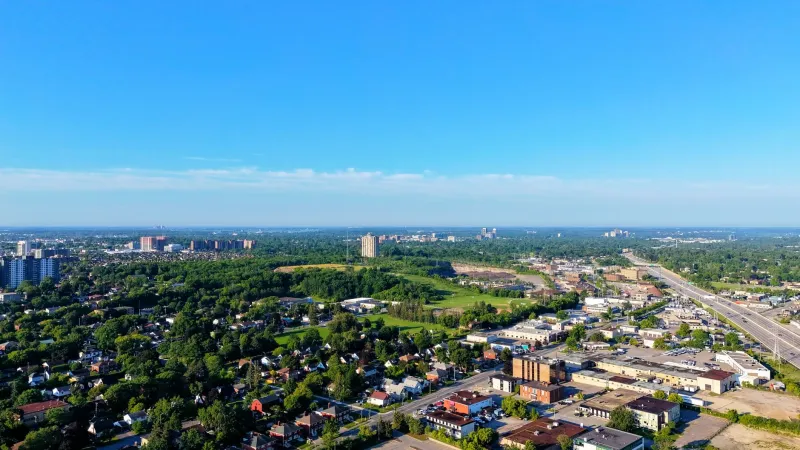
For decades, the suburban office park was a cornerstone of American commercial real estate — a symbol of post-war prosperity, corporate ambition, and the promise of the automobile age. Vast campuses of glass-and-steel low-rises, surrounded by acres of surface parking, defined the economic geography of cities from Atlanta to Phoenix. Today, many of those same campuses sit half-empty, their vacancy rates swollen by remote work, shifting corporate priorities, and a generation of workers who simply refuse to commute to nowhere.
Yet from this landscape of underutilization, something genuinely new is emerging. Across the country, developers, city planners, and institutional investors are not waiting for office demand to recover. Instead, they are tearing up the old blueprint entirely — replacing parking lots with pedestrian plazas, converting corporate lobbies into retail corridors, and building thousands of housing units where cubicle farms once stood. The suburban office park, it turns out, may have its most important chapter still ahead of it.
The Scale of the Problem — and the Opportunity
The numbers are striking. According to commercial real estate analysts, suburban office vacancy rates in major US metros have climbed well above 20 percent in many markets since the pandemic accelerated existing trends. In some submarkets, particularly those built around single corporate tenants or older Class B and C stock, effective vacancy is even higher.
This surplus of underutilized land represents one of the most significant repositioning opportunities in modern real estate history. Suburban office parks frequently sit on large, contiguous parcels with existing infrastructure — roads, utilities, and transit access — that would cost hundreds of millions of dollars to replicate from scratch. For developers willing to navigate complex rezoning processes and phased construction timelines, these sites offer a compelling foundation for something far more ambitious than another corporate campus.
The concept driving most of these conversions is the mixed-use, live-work-play community — a development model that integrates residential, retail, hospitality, and office space within a walkable environment. It is, in many respects, the antithesis of the suburban office park it replaces.
Atlanta: The Buckhead Village Model
Few cities illustrate the adaptive reuse trend more vividly than Atlanta, where several major suburban commercial corridors are undergoing dramatic transformation. The redevelopment of aging office inventory along the Perimeter Center submarket has drawn particular attention from investors and planners alike.
One of the most instructive case studies is the ongoing reimagining of properties along the Central Perimeter corridor, where developers have begun integrating multifamily residential towers, boutique retail, and hospitality uses into what were previously mono-functional office clusters. The logic is straightforward: the infrastructure is already there, the location has established name recognition, and the demand for walkable suburban living — particularly among millennials and empty-nesters — continues to outpace supply.
Atlanta's experience also highlights the critical role of municipal cooperation. Rezoning an office park for mixed use requires political will as much as financial capital, and Atlanta's planning authorities have increasingly signaled openness to density bonuses and expedited approvals for projects that incorporate meaningful affordable housing components.
Phoenix: Desert Reinvention at Scale
In Phoenix, where commercial sprawl has historically been even more pronounced, the transformation of suburban office inventory is taking on a distinctly large-scale character. The Scottsdale Airpark and several aging office corridors in Tempe and Mesa are attracting developer interest precisely because their sheer size allows for the creation of genuine neighborhood-scale communities rather than incremental infill.
Phoenix's extreme heat has paradoxically accelerated some of these conversions. As the city grapples with the urban heat island effect and residents increasingly seek shade-integrated, walkable environments, the open-air, car-dependent office park model has become not just economically obsolete but physically uncomfortable. New mixed-use developments in the Phoenix metro are incorporating shade structures, water features, and native landscaping as selling points — design elements that would have been considered superfluous in the original office park era.
Property values in successfully converted Phoenix submarkets have responded accordingly. Residential units in mixed-use redevelopments are commanding meaningful premiums over comparable product in purely residential suburban settings, a trend that is drawing increased attention from institutional capital.
Dallas: Corporate Campuses Reimagined
Dallas presents perhaps the most complex version of this story. The Dallas-Fort Worth metroplex contains some of the largest concentrations of suburban corporate campus real estate in the United States, much of it built during the 1980s and 1990s tech and financial services booms. As major employers have consolidated footprints or adopted hybrid work models, several of these campuses have become candidates for wholesale redevelopment.
The Legacy West development in Plano — while not a pure conversion project — established a proof of concept for the region, demonstrating that suburban Dallas residents would embrace a walkable, mixed-use environment when given the opportunity. Subsequent projects have pointed to that precedent when making the case to investors and lenders skeptical of suburban densification.
In the Las Colinas submarket in Irving, developers are actively exploring the conversion of dated office inventory into residential and mixed-use product, leveraging the area's existing light rail connectivity as a key asset. The presence of transit infrastructure, often overlooked in older suburban office parks, is increasingly viewed as a decisive factor in determining which sites are viable for repositioning.
What This Means for Property Values and Suburban Living
The implications for the broader property market are significant and still unfolding. For owners of adjacent single-family residential properties, the introduction of mixed-use density has historically produced mixed results — concerns about traffic and character change must be weighed against the genuine amenity value of new retail, restaurants, and public space.
For investors, the risk-adjusted case for adaptive reuse is becoming increasingly compelling, particularly as land costs in established suburban locations remain lower than in urban cores. The challenge lies in execution: phased mixed-use developments require sophisticated capital structures, patient equity, and a tolerance for entitlement risk that not all investor profiles can accommodate.
For the future of suburban living itself, the trend represents something more profound than a real estate transaction. The mixed-use reimagining of the office park is, at its core, a renegotiation of the social contract that shaped American suburbs for the better part of a century. The new suburban resident increasingly expects the walkability, spontaneity, and community texture that were once considered exclusively urban qualities.
The office park is not merely being demolished. It is being evolved — and in that evolution lies one of the most consequential shifts in American real estate geography in a generation.