The 15-Minute City Comes to America: How Walkable Neighborhoods Are Rewriting the Rules of Real Estate Value
The premise sounds almost quaint in a country that built its postwar prosperity around the automobile: imagine living in a place where your office, your grocery store, your children's school, and your favorite park are all reachable on foot within a quarter of an hour. No highway ramp. No parking garage. No forty-five-minute commute that quietly consumes years of your life.
This is the animating idea behind the 15-minute city — an urban planning framework that has moved from Parisian academic theory to active policy implementation in cities across the United States. And as it takes root in American metros, it is doing something that urban planners and real estate analysts rarely see in combination: simultaneously reshaping the built environment, commanding measurable property premiums, and generating fierce political controversy.
The Concept and Its American Adaptation
The 15-minute city framework was popularized by French-Colombian urbanist Carlos Moreno, whose work influenced Paris Mayor Anne Hidalgo's restructuring of that city's street network and neighborhood services. The core principle is straightforward: urban environments should be designed so that residents can access the six essential functions of daily life — living, working, commerce, healthcare, education, and leisure — within a 15-minute walk or bike ride from home.
 Photo: Carlos Moreno, via www.maps-of-the-world.net
In the American context, where metropolitan geography, zoning history, and infrastructure investment have produced some of the most car-dependent built environments on earth, adapting this concept requires significant translation. Cities like Portland, Oregon; Denver, Colorado; and Austin, Texas have been among the most active in pursuing proximity-based development strategies, though their approaches differ considerably in emphasis and execution.
Portland's decades-long investment in light rail, its relatively dense urban grid, and its mixed-use zoning framework have made it a reference point for walkability advocates. Denver has pursued transit-oriented development corridors along its expanding light rail network, clustering mixed-use density around stations in ways that are beginning to mirror the 15-minute model. Austin, long synonymous with sprawl and traffic congestion, has emerged as a more surprising case study — its recent land development code reforms explicitly prioritized walkable infill development as a response to its acute affordability crisis.
What Walk Score Data Reveals About Property Premiums
The relationship between walkability and property value is no longer speculative. Walk Score, the widely used pedestrian accessibility metric maintained by Redfin, assigns properties a score between zero and one hundred based on proximity to amenities, intersection density, and block length. The premium associated with high Walk Scores has been documented across multiple independent analyses.
A frequently cited study found that each one-point increase in Walk Score corresponded to a property value increase of between $500 and $3,000, depending on the metro area — with the premium most pronounced in dense urban cores and transit-accessible neighborhoods. More recent analyses, incorporating post-pandemic mobility data, suggest that the premium has strengthened in certain markets as remote and hybrid workers have recalibrated their location preferences around daily quality of life rather than proximity to a specific employer.
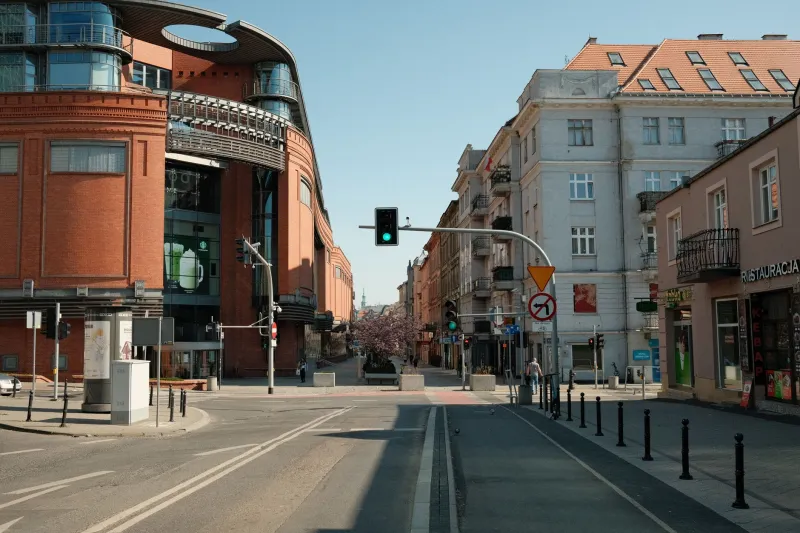
In practical terms, a condominium in Denver's RiNo Arts District — with its walkable access to restaurants, retail, transit, and green space — commands a per-square-foot premium of roughly 20 to 35 percent compared to equivalent units in car-dependent suburban submarkets within the same metro. The differential is not simply a reflection of urban desirability; it is increasingly a function of measurable accessibility that buyers are willing to pay for explicitly.
 Photo: Denver's RiNo Arts District, via usefultravelsite.com
Developer Case Studies: Building for Proximity
Developers who recognized this demand shift early have been rewarded with strong absorption rates and above-market rents. In Portland's Pearl District, the long-term mixed-use buildout that transformed a former rail yard into one of the West Coast's most walkable urban neighborhoods has generated sustained commercial and residential demand for more than two decades — a track record that has influenced development strategies in comparable transitional districts across the country.
In Austin, the Mueller neighborhood — a master-planned mixed-use community developed on the site of the former Robert Mueller Municipal Airport — offers one of the most carefully studied examples of proximity-based development in the Sun Belt. The project incorporated retail, office, medical, and residential uses within a walkable street grid, and its property values have consistently outpaced the broader Austin market. Developers involved in the project have cited the walkability framework as a key differentiating factor in both initial leasing and long-term value retention.
Smaller-scale developers are also responding to the trend. Mixed-use infill projects along formerly mono-use commercial corridors — the kind of arterial strip that defines suburban America — are increasingly incorporating ground-floor retail, upper-floor residential, and publicly accessible open space in configurations designed to support pedestrian activity rather than simply accommodate it.
The Millennial and Gen Z Effect
Demographic pressure is accelerating the walkability premium. Millennials, now the largest cohort of active homebuyers in the US, and Gen Z buyers entering the market in growing numbers have demonstrated consistent preferences for urban and near-urban environments that offer experiential richness and reduced automobile dependence. Survey data from the National Association of Realtors has repeatedly identified walkability as a top-tier priority for buyers under 40 — ranking alongside school quality and commute time in purchase decision hierarchies.
The financial logic reinforces the lifestyle preference. For younger buyers already contending with significant student debt and elevated home prices, the elimination or reduction of vehicle ownership represents a meaningful reduction in household expenses. A two-income household that can function with one car — or none — in a walkable neighborhood is effectively accessing a form of affordability that does not appear in headline price-per-square-foot comparisons.
Political Resistance and the Suburban Counternarrative
Not everyone is embracing the 15-minute city. In car-dependent suburban markets, the concept has become entangled with a broader political backlash against urban planning reform. Critics — particularly vocal in certain conservative media ecosystems — have characterized 15-minute city proposals as government overreach, arguing that they represent an attempt to restrict personal mobility and impose density on communities that have deliberately organized themselves around single-family housing and automobile access.
In practice, most American 15-minute city initiatives involve voluntary incentives, zoning reform, and public investment in walkable infrastructure rather than restrictions on movement. Nevertheless, the political controversy has created real friction for municipal governments attempting to advance proximity-based development policies, particularly in suburban jurisdictions where the electoral calculus favors existing homeowners over prospective residents.
The resistance is not exclusively ideological. Established single-family neighborhoods near proposed mixed-use corridors frequently oppose upzoning on grounds of traffic, parking, and neighborhood character — concerns that, whatever their merits in individual cases, collectively function to limit the supply of walkable housing in markets where demand for it is demonstrably strong.
Commercial Real Estate: The Mixed-Use Opportunity
For commercial real estate, the 15-minute city framework represents both an opportunity and a structural challenge. Neighborhood-scale retail — the grocery stores, pharmacies, coffee shops, and service businesses that anchor walkable communities — is among the most resilient commercial asset classes in markets where pedestrian traffic is sustained. Investors who repositioned portfolios toward mixed-use neighborhood centers ahead of the pandemic have generally outperformed those concentrated in regional malls and auto-oriented retail strips.
The demand for walkable office space, meanwhile, has grown more complicated in the post-pandemic environment. The hybrid work model has reduced the primacy of central business district office concentrations, potentially distributing commercial demand toward the kind of neighborhood-scale office nodes that the 15-minute city framework envisions. Whether this redistribution produces durable commercial value — or simply reflects a transitional moment in workplace culture — remains one of the more consequential open questions in US commercial real estate.
Building the Next Real Estate Boom
The 15-minute neighborhood is not a utopian abstraction. It is a measurable, investable characteristic of the built environment that is commanding real premiums, attracting real buyers, and reshaping real development pipelines across American metros. The political headwinds are genuine, and the infrastructure gaps between aspiration and implementation are substantial.
But the demographic and economic forces behind the walkability premium are structural rather than cyclical. The buyers who prize proximity are not a passing cohort — they are the primary market for residential real estate for the next two decades. The developers, municipalities, and investors who build toward that preference are not chasing a trend. They are positioning for the next chapter of American urban growth — one measured not in highway miles, but in city blocks.