The Hidden Premium: How Soaring Insurance Costs Are Quietly Redrawing the Map of American Homeownership
For most prospective buyers, the monthly mortgage payment is the number that dominates kitchen-table conversations and loan officer consultations. Principal, interest, taxes — these are the figures that determine whether a property pencils out. But increasingly, a fourth variable is disrupting that calculation in ways that neither buyers nor lenders fully anticipated: homeowners insurance.
Across wide swaths of the United States, insurance premiums are not merely rising — they are surging at a pace that is functionally erasing affordability gains made through modest declines in home prices or marginally lower interest rates. In some markets, the insurance component of a monthly housing payment has doubled or even tripled within the span of three to five years. In others, coverage has become nearly impossible to obtain at any price.
This is not a peripheral issue. It is rapidly becoming one of the defining structural forces reshaping where Americans can afford to own property — and where they cannot.
The Scale of the Shift
National data from the Insurance Information Institute and independent analyses by mortgage research firms paint a striking picture. The average annual homeowners insurance premium in the United States climbed to approximately $2,377 in 2023, representing an increase of more than 20 percent over the preceding two years alone. In the states most exposed to climate-related risk, the numbers are considerably more alarming.
Florida, long a bellwether for insurance market stress, has seen average premiums exceed $6,000 annually in many coastal counties — roughly three times the national average. Louisiana homeowners in the greater New Orleans region face similar figures, with some parishes reporting average premiums approaching $5,000 per year. In California's wildfire-vulnerable inland communities, premiums for properties that can still attract coverage have surged 30 to 50 percent in recent policy cycles.
These are not abstract statistics. Translated into monthly housing costs, a $6,000 annual premium adds $500 to a buyer's debt-to-income calculation — a figure that, at current interest rates, could disqualify a borrower from purchasing a property they might otherwise afford, or force a meaningful reduction in their purchase price ceiling.
Insurers as De Facto Gatekeepers
Perhaps the more consequential development is not the cost of insurance but its availability. Major carriers — including State Farm, Allstate, and Farmers — have curtailed or entirely ceased writing new homeowners policies in California, Florida, and Louisiana over the past two years. The decisions are driven by straightforward actuarial logic: the frequency and severity of catastrophic weather events have outpaced the pricing models that once made these markets profitable.
When private insurers exit, homeowners are frequently left with two unpalatable options. The first is the state-administered insurer of last resort — programs such as Florida's Citizens Property Insurance Corporation or California's FAIR Plan — which typically offer narrower coverage at elevated premiums. The second is going uninsured, a choice that is not merely inadvisable but, in most cases, prohibited by mortgage lenders.
This dynamic effectively positions insurance carriers as a secondary layer of real estate gatekeeping. A lender may approve a borrower's credit profile and income, but if a viable insurance policy cannot be secured for the target property, the transaction cannot close. In this sense, the insurance industry's retreat from high-risk markets is functioning as an invisible constraint on homeownership that operates entirely outside the conventional conversation about rates and supply.
The Geography of Exposure Is Expanding
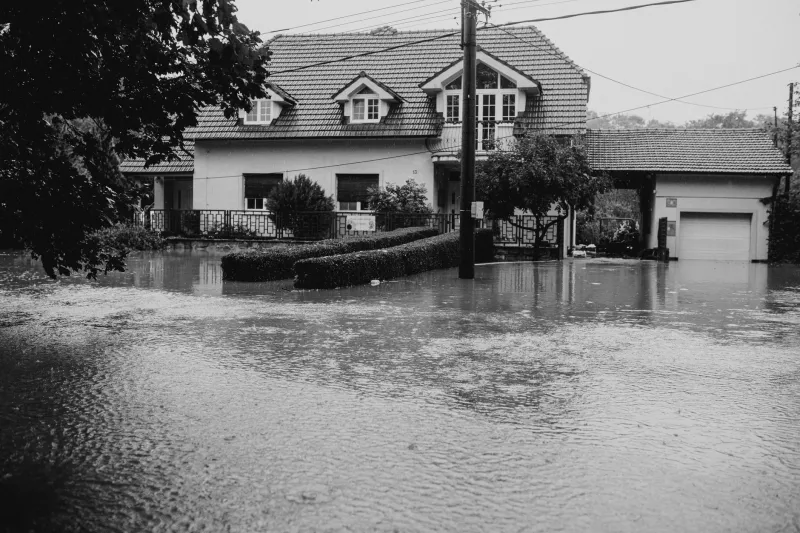
What began as a crisis concentrated in historically hazard-prone states is demonstrating a troubling tendency to migrate. Hail and severe convective storm losses have driven meaningful premium increases across the Midwest and Great Plains. Flooding events in communities that had never previously experienced significant inundation — driven in part by overwhelmed stormwater infrastructure and shifting precipitation patterns — are prompting insurers to reassess risk profiles in markets long considered stable.
The National Flood Insurance Program, itself perpetually underfunded and reliant on congressional reauthorization, has implemented its Risk Rating 2.0 methodology, which recalculates flood insurance premiums based on individual property characteristics rather than broad zone designations. For many homeowners in areas previously assigned to low-risk flood zones, the revised ratings have delivered substantial premium increases — in some cases exceeding 200 percent, phased in over multiple years.
The cumulative effect is a national insurance landscape in which the geography of affordability is being quietly redrawn by actuarial tables rather than zoning maps or market fundamentals.
Implications for Property Values and Lending
Real estate professionals and economists are beginning to quantify what insurance stress means for property valuations. Research from the First Street Foundation and academic institutions has identified measurable price discounts in markets where insurance availability is constrained or premiums have reached extreme levels. In certain Florida zip codes, properties that would otherwise be comparable to inland counterparts are trading at discounts that analysts attribute directly to insurance costs and availability concerns.
The mortgage lending ecosystem is also adapting — slowly, and with some friction. Fannie Mae and Freddie Mac have begun incorporating insurance availability into their risk assessments for loans originated in high-hazard markets. Some lenders are proactively tightening underwriting standards in regions where insurer withdrawal has become pronounced, effectively amplifying the gatekeeping effect that insurance market stress has already introduced.
For buyers financing a purchase with a conventional mortgage, the interaction between insurance requirements and lender underwriting creates a compounding constraint. A property that cannot be insured cannot be financed. A property that can only be insured through a last-resort program at elevated cost may push a borrower's housing expense ratio beyond qualifying thresholds. The result, in practical terms, is that entire communities are becoming structurally less accessible to mortgaged buyers.
Toward a More Transparent Affordability Calculus
The real estate industry has historically presented affordability through a relatively narrow lens — one focused on home prices, interest rates, and down payment requirements. The insurance crisis demands a broader framework. Buyers entering markets where premium volatility is acute require access to forward-looking insurance cost data, not merely current quotes, which may bear little resemblance to renewal figures two or three years hence.
Some PropTech platforms are beginning to integrate insurance risk scoring into property search interfaces, offering prospective buyers a preliminary sense of insurance exposure before they commit to a showing, let alone an offer. This represents a meaningful evolution in how technology can serve buyer interests — though adoption remains uneven and the underlying data is not always current or granular enough to be fully reliable.
Policymakers face a more complex challenge. The withdrawal of private insurers from high-risk markets is a rational response to escalating loss exposure, not a market failure in the conventional sense. Addressing the root causes — inadequate building codes, insufficient land-use restrictions in hazard zones, and the accelerating physical risks associated with climate change — requires coordination across levels of government that has proven historically difficult to achieve.
The Evolving Geography of Viable Homeownership
What is becoming increasingly clear is that the American homeownership map is being redrawn by forces that extend well beyond the Federal Reserve's interest rate decisions or the inventory constraints that have dominated housing market commentary in recent years. Insurance costs, availability, and the underlying risk profiles that drive both are quietly but systematically reshaping which communities remain viable destinations for mortgaged homeownership.
For buyers, lenders, developers, and policymakers alike, ignoring this dimension of the affordability equation is no longer a tenable position. The real estate market of the coming decade will be defined not only by where people want to live, but by where the economics of protection — and the availability of those who provide it — allow them to do so.