Backyard Wealth: How Accessory Dwelling Units Are Quietly Rewriting American Retirement Strategy
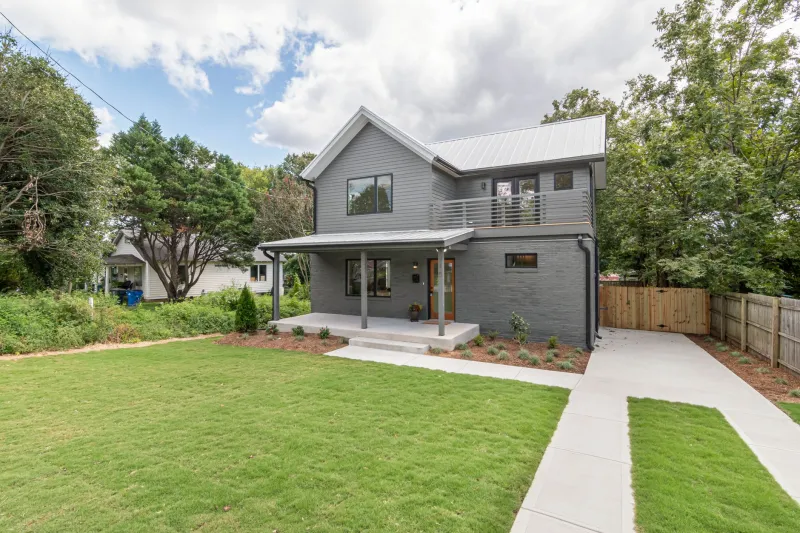
For decades, the conventional wisdom surrounding retirement planning followed a familiar script: maximize your 401(k) contributions, diversify your portfolio, and — if you were disciplined enough — build a modest nest egg that might sustain you through your later years. That script, however, is being rewritten in backyards from Sacramento to Savannah.
Accessory dwelling units — compact, self-contained residences built on the same lot as a primary home — have existed in various forms for generations. Granny flats, carriage houses, in-law suites: the nomenclature has always been informal, the legal status frequently murky. But a convergence of housing shortages, zoning reform, and shifting demographic realities has elevated the ADU from a quiet workaround into a legitimate financial instrument. For a growing number of American homeowners, the question is no longer whether to build one — it is how quickly they can afford to.
The Zoning Revolution Nobody Talked About
The most consequential shift enabling the ADU boom has been regulatory rather than architectural. For much of the twentieth century, single-family zoning codes across American cities effectively prohibited secondary structures intended for habitation. Those restrictions, embedded in municipal codes and enforced through permit denial, kept millions of underutilized lots frozen in low-density amber.
California moved first and moved aggressively. Beginning with landmark legislation in 2017 and reinforced through successive bills in 2019 and 2020, the state systematically dismantled barriers to ADU construction — eliminating owner-occupancy requirements, reducing setback mandates, and capping permit fees. The results were immediate: ADU permit applications in Los Angeles County increased by more than 900 percent between 2017 and 2021, according to data compiled by the California Department of Housing and Community Development.
Other states observed and followed. Oregon legalized ADUs statewide as part of its broader middle-housing legislation. Washington state passed bills requiring cities above a certain population threshold to permit ADUs by right. Maine, Vermont, and Connecticut have each enacted reforms reducing local authority to obstruct ADU development. Even historically restrictive Sun Belt municipalities — long governed by homeowner associations with an institutional aversion to density — have begun softening their positions as housing affordability pressures mount.
The regulatory momentum is not uniform, and meaningful obstacles remain in many jurisdictions. But the directional shift is unmistakable: the legal landscape for ADU construction in the United States is more permissive today than at any point in modern planning history.
What Does It Actually Cost — and What Does It Return?
The financial calculus of ADU construction is more nuanced than the enthusiasm surrounding it sometimes suggests. Costs vary considerably depending on unit type, local construction markets, and site-specific conditions.
Detached ADUs — freestanding structures built in a backyard — represent the most expensive option, with costs typically ranging from $150,000 to $350,000 in high-cost metropolitan areas such as the San Francisco Bay Area, Seattle, and Washington, D.C. In lower-cost markets across the Midwest and South, detached builds can come in between $80,000 and $180,000. Garage conversions and basement conversions, which avoid the cost of a new foundation and exterior shell, frequently run 30 to 50 percent less than comparable detached units.
Against those upfront costs, rental income projections are compelling. A well-positioned ADU in a supply-constrained urban market can generate between $1,500 and $3,500 per month in rent, depending on size, amenities, and location. In premium markets, figures can reach considerably higher. At $2,000 per month, an ADU generating $24,000 annually represents a gross yield of 8 to 12 percent on a $200,000 to $300,000 construction investment — returns that compare favorably with most conventional income-producing assets in the current interest rate environment.
Beyond rental income, ADUs have demonstrated a measurable impact on overall property values. Research from the Urban Land Institute and various academic institutions has consistently found that properties with permitted ADUs sell at a premium relative to comparable homes without secondary structures, often in the range of 20 to 35 percent depending on market conditions.
Real Homeowners, Real Results
The theoretical returns are persuasive, but the human stories are what illuminate the genuine transformational potential of ADU investment.
In Portland, Oregon, a retired schoolteacher in her late sixties converted a detached two-car garage into a 480-square-foot studio unit for approximately $95,000. The unit rents consistently for $1,350 per month, generating more than $16,000 annually — a sum that, combined with Social Security income, has allowed her to forgo drawing on retirement savings she had feared would be insufficient. She describes the ADU not as a real estate investment but as "a decision I made with a hammer instead of a brokerage account."
In the Atlanta suburb of Decatur — one of the more ADU-progressive municipalities in Georgia — a couple in their early fifties built a 650-square-foot detached cottage for $165,000, financed through a cash-out refinance at a rate they locked in before the Federal Reserve's rate-hiking cycle. Their ADU rents for $1,900 per month to a long-term tenant who works remotely. They anticipate the unit will be paid off through rental income within nine years, at which point it becomes an unencumbered income-producing asset they intend to pass to their children.
These are not outliers. They represent a growing cohort of homeowners who have identified the built environment of their own property as an underutilized financial resource.
Financial Planners Are Taking Notice
For much of the past decade, ADUs occupied an awkward position in personal finance conversations — too complex for generalist advisors, too property-specific for portfolio managers. That is changing. A meaningful number of certified financial planners are now incorporating ADU analysis into retirement projections for homeowner clients, particularly those whose primary residence represents a disproportionate share of net worth.
The concept is straightforward: rather than treating home equity as a static store of value to be accessed only through downsizing or reverse mortgage, ADU development converts dormant equity into an active income stream. For homeowners who purchased their properties decades ago and now hold substantial unrealized appreciation, this approach can be particularly powerful.
Financing mechanisms are also maturing. Several lenders now offer ADU-specific loan products that incorporate projected rental income into underwriting calculations, reducing the qualification barrier for homeowners with limited liquid assets but strong equity positions. Fannie Mae's ADU policy updates have further encouraged conventional lenders to treat ADU rental income as a legitimate qualifying factor in refinance and purchase transactions.
Which Markets Lead the Way
California remains the undisputed national leader in ADU activity, accounting for the majority of permitted ADU construction in any given year. Within the state, Los Angeles, San Jose, and San Diego have emerged as particularly active markets, driven by acute housing shortages and strong rental demand.
Beyond California, Portland and Seattle have developed robust ADU ecosystems supported by permissive local codes and active homeowner communities sharing design and construction resources. Austin, Texas — despite operating within a state framework that has historically limited municipal housing mandates — has seen ADU interest surge alongside its broader population growth.
Midwestern markets, including Minneapolis (which eliminated single-family zoning in 2040 planning documents) and Columbus, Ohio, represent emerging opportunities where land costs are lower and construction economics more favorable, even if rental yields are more modest than coastal counterparts.
Building the Future, One Backyard at a Time
The ADU revolution is, at its core, a story about the evolution of what it means to own property in America. The twentieth-century model — acquire a home, maintain it, sell it in retirement — assumed a stability of markets and demographics that no longer fully applies. Rising longevity, diminished pension coverage, and volatile financial markets have created conditions in which passive asset accumulation alone may be insufficient.
The homeowners converting garages and constructing backyard cottages are not simply adding square footage. They are reconceiving their properties as productive assets — platforms for income generation, tools for intergenerational wealth transfer, and hedges against the uncertainties of a retirement landscape that looks markedly different from the one their parents navigated.
As zoning continues to liberalize and financing products continue to mature, the barriers to ADU development will fall further. The question for American homeowners is not whether this opportunity will remain available — it is whether they will recognize it before their backyard becomes someone else's investment thesis.