Roots in the Rafters: How Indoor Farming Is Forging a New Commercial Real Estate Asset Class in America's Cities
A New Crop of Tenants
For decades, American cities watched their industrial and retail real estate age in place. Warehouses built for manufacturing economies sat half-occupied. Strip malls anchored by departed department stores struggled to attract replacement tenants. Then, quietly, a different kind of occupant began moving in — one that brought grow lights instead of forklifts, climate-control systems instead of loading docks, and leafy green produce instead of consumer goods.
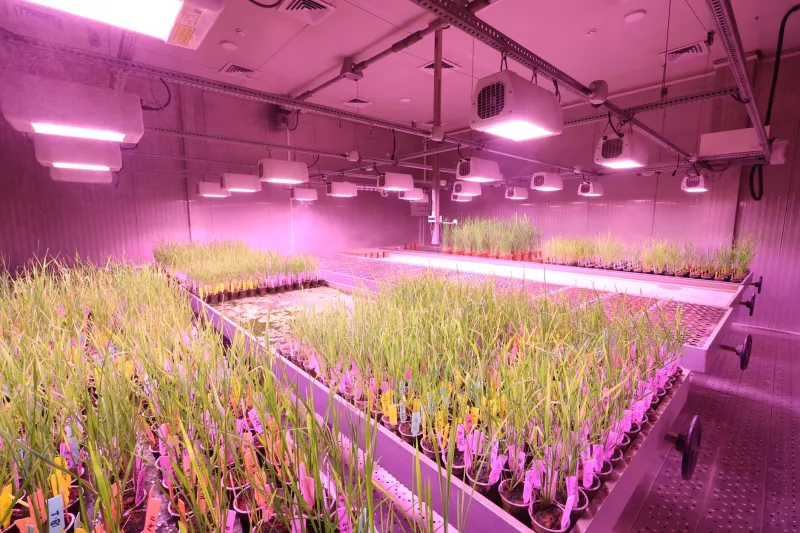
Vertical and indoor farming operations have emerged as an unexpected but increasingly significant force in urban commercial real estate. By stacking crops in climate-controlled, artificially lit environments, these facilities can produce yields far exceeding traditional agriculture on a fraction of the land. More importantly for the property market, they can do so inside existing urban structures — transforming underperforming assets into productive, lease-generating hubs with a distinctly 21st-century purpose.
The convergence of food security concerns, sustainability mandates, and a glut of underutilized urban square footage has created conditions that neither the agricultural sector nor the real estate industry anticipated. Yet here they are, negotiating lease terms together.
From Warehouse to Harvest Floor
The physical requirements of indoor farming align surprisingly well with certain categories of distressed commercial property. High ceilings accommodate vertical growing racks. Wide-span floor plates allow for modular production layouts. Robust electrical infrastructure, often already present in industrial buildings, supports the significant power demands of LED lighting systems. Loading dock access — once used for outbound freight — now serves inbound supply chains and outbound produce distribution.
In Chicago's South Side, former industrial properties near the city's food processing corridors have attracted indoor farming operators drawn by low lease rates, proximity to urban food deserts, and access to municipal sustainability incentives. Gotham Greens, one of the country's more established controlled-environment agriculture companies, has built a network of urban greenhouse facilities across multiple U.S. cities, including a prominent Chicago rooftop installation, demonstrating that the model can function at meaningful commercial scale.
In Newark, New Jersey, AeroFarms — before its financial restructuring — operated what was once described as the world's largest indoor vertical farm inside a converted steel mill. The project drew significant attention not only for its agricultural ambitions but for what it represented in property terms: a shuttered industrial relic repurposed into a functioning, job-creating facility with genuine civic value.
In Detroit, where post-industrial vacancy has long defined the commercial landscape, urban agriculture has been woven into broader redevelopment strategies. The city's planning department has actively explored zoning frameworks that accommodate food production alongside light industrial and mixed-use classifications, acknowledging that the traditional categories no longer capture the full range of productive urban land use.
Zoning Law Plays Catch-Up
Perhaps no dimension of the agri-real estate trend is more consequential — or more complicated — than its relationship with municipal zoning codes. Most American cities developed their land-use frameworks around a rigid separation of agricultural, industrial, commercial, and residential activity. Indoor farming occupies an ambiguous position within these inherited taxonomies.
In practice, a vertical farm operating inside a warehouse may technically qualify as agricultural use, industrial use, or food processing, depending on the jurisdiction and the specific methodology employed. This ambiguity creates real friction for developers and investors seeking predictable permitting pathways and stable regulatory environments.
Some cities have moved proactively. Denver, Seattle, and New York City have each introduced or expanded zoning provisions that explicitly accommodate urban agriculture, including indoor and rooftop production, as permitted uses in commercial and industrial zones. These changes signal a broader municipal recognition that food production is no longer exclusively a rural activity — and that urban land-use policy must evolve accordingly.
For real estate investors, regulatory clarity is not merely a convenience. It is a prerequisite for underwriting. Properties positioned in jurisdictions with defined agri-use zoning pathways carry meaningfully lower entitlement risk than those in cities where indoor farming occupies a regulatory gray zone.
The Investment Calculus
Whether agri-real estate constitutes a durable investment thesis or an ambitious but ultimately niche experiment remains a genuinely open question. The sector has experienced both impressive growth and notable setbacks in recent years.
The capital requirements for indoor farming are substantial. Build-out costs for a fully equipped vertical farm can run several hundred dollars per square foot, and operating expenses — particularly energy consumption — remain a persistent challenge to profitability. Several high-profile operators have encountered financial difficulties, raising questions about the long-term viability of the model without technological breakthroughs in energy efficiency or significant reductions in equipment costs.
At the same time, the structural demand drivers are real and durable. Consumers increasingly prioritize locally grown, pesticide-reduced produce. Supply chain disruptions have accelerated interest in regional food production resilience. Municipal governments facing food insecurity pressures are actively incentivizing urban agricultural investment through grants, tax abatements, and favorable lease terms on city-owned properties.
For commercial real estate investors, the opportunity may be less about betting on individual farming operators and more about recognizing a new category of adaptive reuse. Properties positioned to attract indoor farming tenants — or to accommodate hybrid agricultural-commercial uses — may command a valuation premium in markets where food system infrastructure is becoming a recognized component of urban amenity and resilience.
Some institutional investors are beginning to approach agri-real estate as a distinct sub-asset class, analogous to the emergence of data centers or cold storage facilities as specialized industrial categories. Each of those sectors began as niche adaptations of existing property types before maturing into mainstream investment targets. Indoor farming may be tracing a similar trajectory, albeit at an earlier and more uncertain stage.
Neighborhood Identity and the Urban Farm Effect
Beyond the financial calculus, indoor farming operations are beginning to shape the character of the neighborhoods in which they operate. In several cities, vertical farms have become anchors for broader food-district identities, attracting complementary businesses — specialty grocers, culinary incubators, farm-to-table restaurants — that reinforce a local brand around fresh, sustainably produced food.
This neighborhood-level dynamic is not trivial from a property perspective. Commercial districts with coherent identities and complementary tenant mixes tend to generate stronger foot traffic, higher retail rents, and greater long-term stability than undifferentiated corridors. To the extent that indoor farming catalyzes food-focused district formation, it may generate property value benefits that extend well beyond the farm facility itself.
At the same time, the energy intensity of indoor farming operations raises legitimate questions about urban sustainability. The environmental calculus of growing produce under artificial light in a city center versus transporting it from a rural farm is not always straightforward. As the sector matures, its credibility — and its attractiveness to ESG-conscious investors — will depend on meaningful progress in reducing its carbon footprint.
A Harvest Still Maturing
The emergence of indoor farming as a force in urban commercial real estate is neither a fully proven thesis nor a passing novelty. It is, more accurately, a genuine evolution in the relationship between cities and the land they occupy — one that reflects broader transformations in food systems, sustainability expectations, and the adaptive reuse of aging urban infrastructure.
For real estate professionals, the relevant question is not whether vertical farming will replace conventional property uses, but whether it represents a credible and growing demand source for a specific category of urban commercial space. The evidence increasingly suggests that it does. How durable that demand proves — and how effectively the industry resolves its cost and regulatory challenges — will determine whether agri-real estate takes root as a mainstream asset class or remains a compelling but limited feature of the urban property landscape.