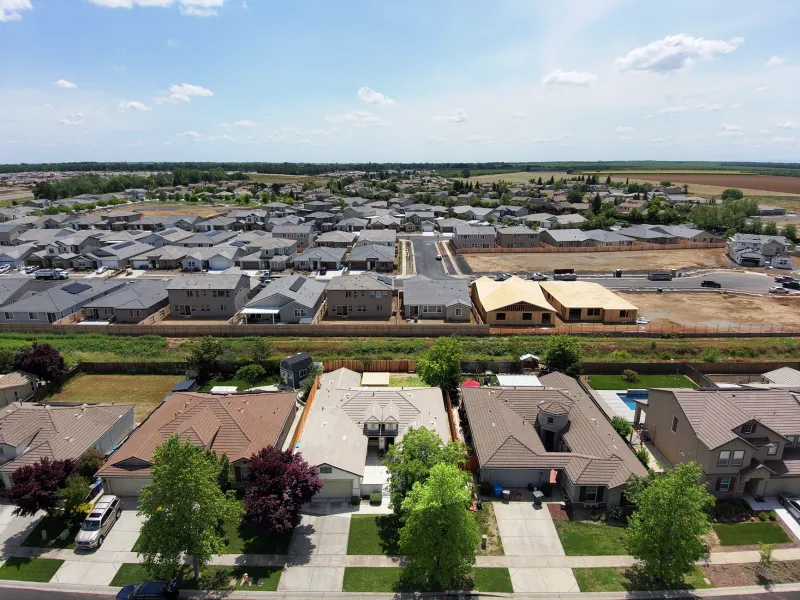
Beneath the Surface: Why America's Crumbling Water Infrastructure Is Becoming Real Estate's Most Underestimated Liability
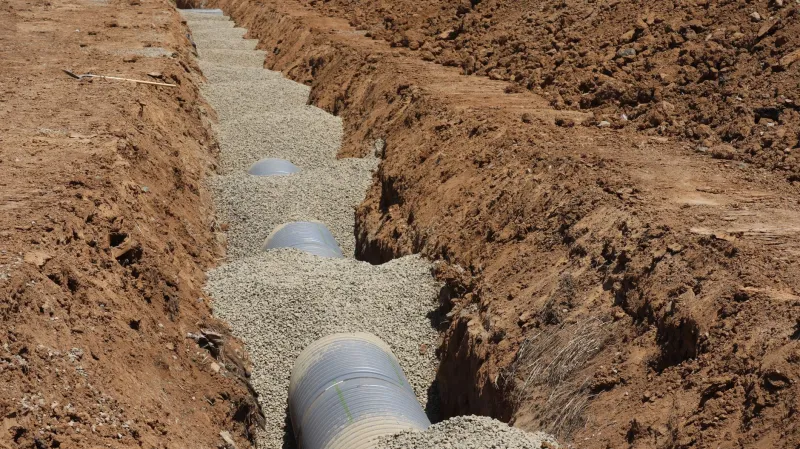
Beneath the Surface: Why America's Crumbling Water Infrastructure Is Becoming Real Estate's Most Underestimated Liability
When a prospective homebuyer schedules a property inspection, the checklist is predictable: roof condition, HVAC age, foundation integrity, electrical panel. What rarely appears on that list — and what may ultimately prove most consequential to long-term property value — is the condition of the pipes running beneath the street outside.
America's water and sewer infrastructure is aging at a pace that federal engineers have described as alarming. The American Society of Civil Engineers has consistently awarded the nation's drinking water and wastewater systems a near-failing grade in its infrastructure report cards, estimating that a water main breaks somewhere in the United States every two minutes. Beneath that statistic lies a profound and largely unacknowledged real estate risk — one that is beginning to register with sophisticated investors even as it remains invisible to most ordinary buyers.
A Crisis Measured in Decades, Not Headlines
Much of the water infrastructure serving American cities and suburbs was installed in the mid-twentieth century, with some urban systems — particularly in the Northeast and Midwest — relying on cast-iron mains laid during the late 1800s. These systems were engineered with service lives of roughly 75 to 100 years. Many have long since exceeded that threshold.
The consequences are not merely operational. When a municipality faces repeated main breaks, sinkholes, or sewage overflows, the fiscal implications ripple outward in ways that directly touch property markets. Repair costs are frequently passed to ratepayers through utility fee increases, which can reduce household purchasing power and, by extension, housing demand. More critically, cities carrying significant deferred infrastructure debt — or those forced to issue bonds to fund emergency pipe replacement — can see their municipal credit ratings come under pressure. Downgraded bond ratings translate to higher borrowing costs, which can constrain public services and suppress the long-term desirability of affected neighborhoods.
Jackson, Mississippi, offered a stark and well-publicized illustration of this dynamic. Years of infrastructure neglect culminated in a cascading water system failure in 2022 that left hundreds of thousands of residents without reliable access to safe drinking water. Property values in affected areas suffered measurably, and the city's fiscal standing deteriorated alongside its pipes.
What Investors Are Actually Examining
While most homebuyers remain focused on above-ground attributes, a cohort of institutional investors, developers, and real estate analysts has begun incorporating utility infrastructure assessments into standard due diligence protocols.
Three primary variables have emerged as central to this analysis.
Pipe age and material composition are the most fundamental starting points. Lead service lines — still present in an estimated six to ten million American homes, according to the Environmental Protection Agency — represent not only a public health hazard but a significant financial liability. Properties connected to lead service lines face potential remediation costs, reduced marketability, and in some jurisdictions, mandatory disclosure obligations that can complicate transactions. Galvanized steel and aging cast-iron mains carry their own failure probabilities, and investors in markets where these materials predominate are beginning to price in replacement risk accordingly.
Water quality data has become increasingly accessible through federal regulatory frameworks. The EPA's Safe Drinking Water Information System (SDWIS) provides publicly searchable records of violations issued to water systems across the country. Similarly, the Environmental Working Group maintains a consumer-facing database — the EWG Tap Water Database — that allows address-level searches for detected contaminants in local water supplies. Persistent violations, even those deemed below regulatory action thresholds, are now appearing in investor risk models as indicators of systemic infrastructure stress.
Utility financial health is perhaps the most underappreciated dimension of this analysis. Municipal water and sewer utilities operate as enterprise funds in most jurisdictions, meaning their financial statements are publicly available through official channels, including the Municipal Securities Rulemaking Board's EMMA database. Analysts examining these filings look for signs of deferred capital investment, escalating debt-service ratios, and rate structures that may be politically constrained below the level necessary to fund adequate maintenance. A utility that has not raised rates in a decade while its pipe network ages is, in effect, accumulating a hidden liability that ratepayers — and by extension, property owners — will eventually absorb.
Tools That Are Changing the Conversation
The emergence of publicly accessible data platforms has begun to democratize infrastructure risk assessment in ways that were not possible even five years ago.
Beyond the EPA and EWG databases already mentioned, the EPA's ECHO (Enforcement and Compliance History Online) system provides detailed compliance histories for water systems, including the nature and duration of violations. Some states have developed their own interactive mapping tools — New Jersey's lead service line mapping initiative and Michigan's post-Flint infrastructure disclosure requirements are among the more advanced examples — that allow buyers to determine whether a specific address is served by a flagged service line.
At the neighborhood scale, tools such as the National Risk Index, maintained by the Federal Emergency Management Agency, can reveal compounding vulnerabilities where aging infrastructure intersects with flood risk or other climate-related hazards. Properties situated in areas where subsurface pipe failures are most likely to coincide with surface flooding events face a particularly complex risk profile.
Forward-thinking real estate platforms and data aggregators are beginning to incorporate infrastructure scores alongside more conventional property metrics. While no single standardized rating yet exists for water system health at the parcel level, the direction of travel is clear: the market is moving toward greater transparency, and buyers who understand how to navigate existing data sources hold a meaningful informational advantage.
Implications for Buyers, Sellers, and Developers
For prospective buyers, the practical takeaway is straightforward: infrastructure due diligence should begin before an offer is submitted, not after. Requesting a water quality report from the local utility, reviewing any outstanding violations through federal databases, and examining recent rate history are steps that cost little time but can reveal significant long-term exposure.
For sellers and their agents, awareness of infrastructure risk is increasingly a disclosure consideration. Several states have expanded seller disclosure requirements to include known service line materials, and the legal landscape in this area is evolving. Sellers in markets with documented infrastructure challenges may find that proactive transparency — paired with appropriate pricing — is preferable to the reputational and legal exposure of material omission.
For developers, the calculus is more complex. Infill projects in older urban neighborhoods must now account for the possibility that adjacent public infrastructure will require costly upgrades as a condition of development approval. In some jurisdictions, municipalities are shifting a portion of main replacement costs to adjacent property owners or development projects, a practice that can materially affect pro forma projections.
The Long View
America's infrastructure deficit is not a problem that will resolve itself quietly. The EPA estimates that the nation will require more than $625 billion in water infrastructure investment over the next two decades simply to maintain current service levels — a figure that does not account for the additional demands posed by population growth, climate adaptation, or the remediation of lead service lines.
The real estate market, as it has done with flood risk and energy efficiency, will gradually price this reality into property values. The question for today's buyers, sellers, and investors is not whether infrastructure condition will matter — it already does. The question is whether they will develop the literacy to recognize it before the market makes the assessment for them.
In an era defined by data availability and technological sophistication, the tools to perform that assessment are already within reach. The gap between those who use them and those who do not is where the next generation of real estate risk — and opportunity — will be found.