Betting on Blight: How Contrarian Investors Are Finding Opportunity in America's Emptying Cities
Betting on Blight: How Contrarian Investors Are Finding Opportunity in America's Emptying Cities
In the conventional grammar of American real estate, population growth is the foundational sentence. More residents mean more demand, higher rents, appreciating land values, and the kind of compounding returns that have defined wealth creation in Sun Belt metros for the better part of three decades. By that logic, a city losing residents at a sustained rate is simply a market to avoid — a zip code to filter out before the analysis even begins.
But a growing cohort of investors is rejecting that logic entirely. From Gary, Indiana to Youngstown, Ohio, from Flint, Michigan to Rockford, Illinois, these contrarians are acquiring properties at acquisition prices so far below replacement cost that conventional valuation frameworks struggle to even process the numbers. Their thesis is not that these cities will become the next Nashville. It is something far more nuanced — and, in the eyes of an increasing number of institutional observers, far more compelling.
The Arithmetic of Abandonment
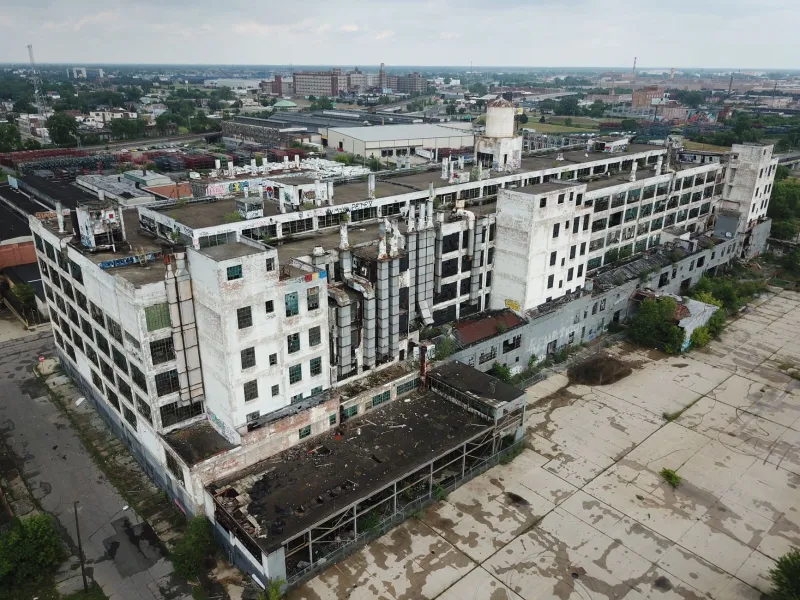
To understand the investment case, one must first understand the scale of the opportunity. The United States currently contains dozens of cities that have lost more than 20 percent of their peak population, with several — most notably Detroit, Cleveland, and St. Louis — having shed upward of 50 percent over the past half-century. The physical infrastructure of those cities, built to serve populations that no longer exist, now sits partially vacant, generating minimal tax revenue while demanding ongoing maintenance from fiscally strained municipal governments.
The result is a structural oversupply of real estate at the most extreme end of the pricing spectrum. Residential properties in certain Youngstown neighborhoods routinely transact below $10,000. Commercial parcels in Gary that once anchored neighborhood retail corridors are available for figures that would not cover a single month's rent in Chicago, just 30 miles to the northwest. For investors willing to absorb the complexity and uncertainty that accompanies such pricing, the entry barriers are, by definition, extraordinarily low.
Low acquisition cost alone does not constitute an investment thesis. What transforms distressed pricing into genuine opportunity, proponents argue, is the convergence of several additional forces that are quietly reshaping the operating environment in shrinking cities.
Land Banks as a Structural Catalyst
Perhaps the most underappreciated mechanism driving the shrinking-city investment case is the proliferation of municipal land bank programs across post-industrial America. Land banks — government entities authorized to acquire, manage, and dispose of tax-delinquent and abandoned properties — have expanded dramatically over the past decade, with more than 250 now operating across 16 states.
For investors, land banks serve a dual function. They streamline the acquisition of properties that would otherwise be encumbered by years of back taxes, clouded titles, and tangled heirship disputes — the administrative friction that historically made distressed urban real estate more trouble than it was worth. Simultaneously, many land banks have developed structured disposition programs that actively seek development partners willing to commit to specific rehabilitation timelines and end-use requirements.
Cuyahoga County Land Bank in Ohio, one of the nation's most sophisticated operations, has facilitated the transfer of tens of thousands of properties since its founding, developing a disposition infrastructure that serious investors can navigate with relative efficiency. Genesee County in Michigan, home to Flint, has pioneered similar frameworks. These programs do not eliminate complexity, but they substantially reduce it — converting what was once an opaque, municipality-by-municipality scavenger hunt into something approaching a structured acquisition pipeline.
The Demographic Cliff and Its Investment Implications
Shrinking cities face a phenomenon that analysts have begun calling the demographic cliff — the point at which an aging, declining population begins to generate a cascading release of housing stock as elderly residents exit homeownership through death, assisted living transitions, or family consolidation. This dynamic, already visible in several Rust Belt markets, is expected to accelerate materially through the 2030s.
For opportunistic investors, the demographic cliff represents a sustained supply event in markets where demand, while modest, has not disappeared entirely. Younger residents, often priced out of neighboring metros, continue to inhabit these cities. Healthcare systems, universities, and logistics operations maintain significant employment footprints. The question is not whether demand exists, but whether it is sufficient to support a viable investment model at the acquisition prices that abandonment-driven supply makes possible.
Increasingly, the answer appears to be yes — provided the investor approaches the market with appropriate expectations. Shrinking-city investments are not appreciation plays in the traditional sense. They are yield-driven strategies, premised on the gap between ultra-low acquisition costs and rental income that, while modest in absolute terms, produces cash-on-cash returns that established markets cannot replicate.
Redevelopment Models That Are Actually Working
Beyond individual property acquisition, a subset of investors is pursuing more ambitious redevelopment theses that treat shrinking cities not as collections of distressed assets but as canvases for deliberate neighborhood restructuring. This approach — sometimes described as strategic consolidation — involves acquiring contiguous parcels in targeted corridors, working with municipal partners to redirect infrastructure investment, and creating density where the surrounding vacancy might otherwise suggest the opposite impulse.
In Youngstown, a city that became something of a national case study after formally adopting a shrinking-city master plan in 2005, private developers have partnered with the city's land bank to assemble parcels for mixed-use projects anchored by healthcare, education, and arts tenants. The results are uneven, as one might expect in any genuinely pioneering context, but several projects have demonstrated that thoughtful assembly and patient capital can generate stabilized assets in environments that conventional underwriting would never have approved.
Similar dynamics are emerging in smaller-scale markets across the Midwest and mid-Atlantic. Investors with backgrounds in distressed debt and special situations — practitioners accustomed to complexity and extended timelines — have found that their analytical frameworks translate surprisingly well to the shrinking-city context.
The Risks That Demand Acknowledgment
The contrarian case for shrinking-city investment is not without its vulnerabilities, and intellectual honesty requires that they be stated plainly. Population decline, if it continues at current trajectories, does not stabilize on its own. Cities that lose residents lose tax base, which degrades municipal services, which accelerates further departure — a feedback loop that has proven difficult to interrupt in the absence of significant external economic catalysts.
Property management in high-vacancy environments presents operational challenges that do not exist in conventional markets. Vandalism, utility service inconsistencies, and the social dynamics of extreme neighborhood disinvestment create carrying costs that can erode returns that look compelling on paper. And the liquidity profile of these assets — the ability to exit a position efficiently when circumstances demand it — is fundamentally different from anything an investor would encounter in a functioning market.
Federal and state policy shifts also represent a meaningful variable. Shrinking-city investment theses frequently depend, at least in part, on the continuation of land bank programs, tax abatement structures, and community development incentives that are subject to political revision.
A New Lens on American Real Estate Value
What the shrinking-city investment thesis ultimately demands is a willingness to evaluate real estate value through a lens that the industry's dominant frameworks were not designed to accommodate. The metrics that work in Austin or Phoenix — price-to-rent ratios calibrated to appreciation assumptions, cap rates benchmarked against compressed coastal standards — do not travel well to Gary or Flint.
What does travel, for investors willing to make the intellectual adjustment, is the foundational logic of contrarian capital allocation: that markets which others have abandoned tend to misprice assets in ways that patient, analytically rigorous investors can exploit. America's emptying cities are, in that sense, not anomalies to be avoided. They are, for a particular type of investor with a particular tolerance for complexity, precisely the kind of frontier that the evolution of real estate practice demands the industry learn to navigate.