Decibels and Dollars: How America's Acoustic Environment Is Becoming a Measurable Force in Property Valuation
Decibels and Dollars: How America's Acoustic Environment Is Becoming a Measurable Force in Property Valuation
For decades, the checklist guiding American homebuyers has remained largely unchanged: square footage, school district ratings, commute times, and comparable sales. Noise, when considered at all, was treated as a subjective discomfort rather than a financial variable. That assumption is now being systematically dismantled.
A convergence of high-resolution noise mapping technology, renewed federal attention to environmental acoustics, and a growing body of litigation is compelling buyers, appraisers, lenders, and municipal planners to confront an uncomfortable reality: the acoustic environment surrounding a property is not merely a quality-of-life consideration. It is an economic one — and in many American markets, it is already being priced accordingly.
The Science Behind the Discount
Research into what economists call the "noise depreciation index" has been accumulating for years, but its findings are only now filtering into mainstream appraisal practice. Studies conducted in proximity to major airports — including Chicago O'Hare, Los Angeles International, and Hartsfield-Jackson Atlanta International — consistently demonstrate that residential properties located within high-decibel flight path corridors trade at discounts ranging from 5 to 15 percent relative to acoustically comparable homes outside those zones.
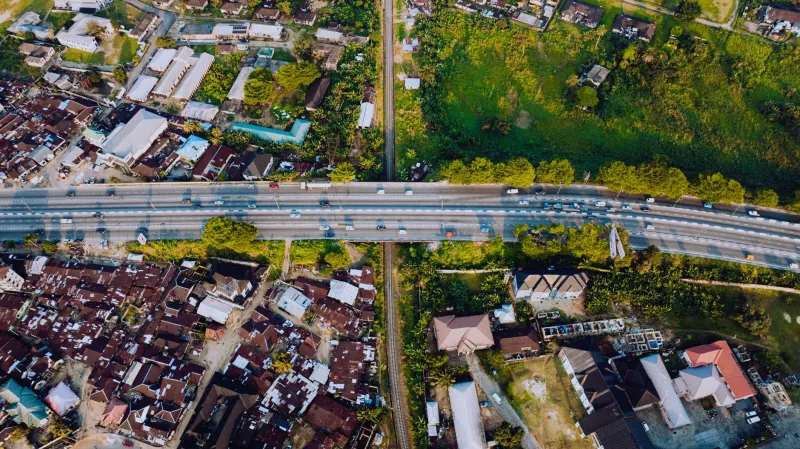
Highway proximity compounds the problem in a different register. The Federal Highway Administration has long acknowledged that traffic noise above 66 decibels — roughly the ambient level experienced within 500 feet of a busy interstate — constitutes a significant environmental impact. Yet millions of American homes sit within that threshold, and until recently, their valuations rarely reflected it with any precision.
The emergence of granular noise mapping platforms is changing that. Tools capable of overlaying real-time traffic, aviation, and industrial sound data onto parcel-level property maps are now accessible not only to municipal governments but to sophisticated buyers and institutional investors. What was once an anecdotal observation — "that house backs up to the freeway" — can now be quantified in decibels, mapped across time of day, and compared against neighborhood benchmarks.
Litigation Is Accelerating the Reckoning
Beyond the appraisal desk, the courtroom is becoming an unlikely driver of acoustic accountability in real estate. Communities near airport expansion projects in Dallas, Denver, and the greater New York metropolitan area have pursued legal action against aviation authorities, arguing that altered flight paths have materially damaged property values without adequate compensation. Several of these cases have resulted in settlements or mandated noise abatement programs that carry significant financial implications for surrounding municipalities.
The litigation wave is not confined to airports. Industrial corridors in states including Ohio, Pennsylvania, and Texas have faced legal challenges from residential communities asserting that chronic noise exposure constitutes a form of nuisance that depresses property values and undermines habitability. Courts in multiple jurisdictions have begun awarding damages that effectively monetize acoustic harm — establishing precedents that the broader real estate industry cannot afford to ignore.
For appraisers, this legal landscape creates both obligation and opportunity. The Appraisal Institute has increasingly encouraged its members to document environmental noise conditions as part of comprehensive property assessments. In markets where litigation has already produced documented price impacts, failing to account for acoustic conditions may expose appraisers to professional liability.
The Quiet Premium Takes Shape
On the other side of this emerging market dynamic, a distinct investment thesis is crystallizing. Developers and investors who have recognized the commercial value of acoustic tranquility are actively seeking properties and sites that can credibly claim — and demonstrate — low ambient noise environments.
This "quiet premium" is most visible in the luxury residential segment, where soundproofing specifications have become a meaningful differentiator. High-end multifamily developments in urban cores are increasingly marketing triple-pane glazing, acoustic insulation systems, and decibel-rated mechanical equipment as headline amenities rather than technical footnotes. The implicit message is unambiguous: silence, in a noisy city, commands a price.
The dynamic extends beyond construction specifications to site selection. Developers pursuing mixed-use projects in secondary and tertiary markets are beginning to incorporate noise assessments into their initial feasibility analyses — evaluating proximity to rail lines, flight paths, and industrial operations with the same rigor previously reserved for flood zones and soil conditions. In markets where acoustic data is now publicly accessible, this due diligence is becoming table stakes rather than a competitive differentiator.
Investors operating in the distressed property space have identified a related opportunity. Neighborhoods that carry noise-related price discounts due to proximity to highways or industrial sites may, in certain cases, represent undervalued assets — particularly where infrastructure changes, noise barrier construction, or industrial rezoning could materially improve acoustic conditions over a defined investment horizon.
Acoustic Zoning: The Policy Frontier
Perhaps the most consequential development on the horizon is the prospect of formal acoustic zoning — regulatory frameworks that would establish permissible noise thresholds for different land use categories and require developers to demonstrate compliance as a condition of entitlement.
Several European cities, including Amsterdam and Zurich, have implemented noise zoning frameworks that restrict certain residential uses in high-decibel corridors and mandate acoustic impact assessments for major development projects. The United States has, to date, adopted no equivalent federal standard, leaving municipalities to act independently — or not at all.
There are early signals of movement. The Environmental Protection Agency, which effectively suspended its Office of Noise Abatement and Control in 1982, has faced renewed calls from public health advocates and urban planning researchers to reassert a federal role in acoustic standards. Meanwhile, cities including New York, San Francisco, and Portland have begun exploring noise ordinance modernization as part of broader environmental justice initiatives, recognizing that the communities most exposed to chronic noise pollution are disproportionately lower-income and communities of color.
For real estate professionals, the prospect of acoustic zoning represents both a risk and an opportunity. Properties that currently carry noise-related discounts could face further regulatory constraints if formal thresholds are established. Conversely, areas that achieve acoustic compliance certification under any future framework could command meaningful premiums — much as energy efficiency ratings have become a recognized value driver in residential markets over the past decade.
Pricing the Inaudible
The integration of acoustic conditions into American property valuation remains uneven. In markets adjacent to major infrastructure projects with well-documented noise impacts, the discount is already baked into transaction prices. In quieter suburban and rural markets, the conversation has barely begun. And in the dense urban environments where noise is simply accepted as an environmental constant, the financial implications of acoustic differentiation are only beginning to surface.
What is no longer in question is whether sound matters to value. The research, the litigation, the technology, and the emerging investment strategies all point in the same direction. The acoustic environment surrounding a property — the cumulative weight of aircraft, traffic, industry, and urban activity pressing against its walls — is a measurable, monetizable condition.
For buyers, the practical implication is clear: before signing, listen. For developers, the imperative is to design for silence as deliberately as for light and space. And for the broader industry, the message is that the next frontier of property valuation may not be visible on any floor plan. It may only be heard — or, more precisely, not heard at all.