Hollowed Out: How the Collapse of America's Mid-Tier Housing Market Is Locking a Generation Out of the Property Ladder
Hollowed Out: How the Collapse of America's Mid-Tier Housing Market Is Locking a Generation Out of the Property Ladder
For most of the twentieth century, the American property ladder operated with a certain reliable logic. A young household would rent for a few years, accumulate enough for a down payment on a modest starter home priced somewhere in the attainable middle of the market, build equity over time, and eventually trade up into something larger and more permanent. It was not a perfect system, but it functioned. Today, that architecture is fracturing — and the fracture point is not at the top of the market or the bottom. It is squarely in the middle.
Across the country, the inventory of homes priced between roughly $200,000 and $400,000 — long considered the engine room of residential real estate mobility — is contracting at a pace that has alarmed housing economists, urban planners, and community advocates alike. What is disappearing is not simply a price bracket. It is the connective tissue of the American housing market, and its erosion is severing a pathway that entire generations once relied upon to convert income into lasting wealth.
The Three Forces Hollowing Out the Middle
The depletion of mid-tier housing stock is not the product of a single cause. Rather, it is the compounded result of three distinct but reinforcing pressures that have converged over the past two decades.
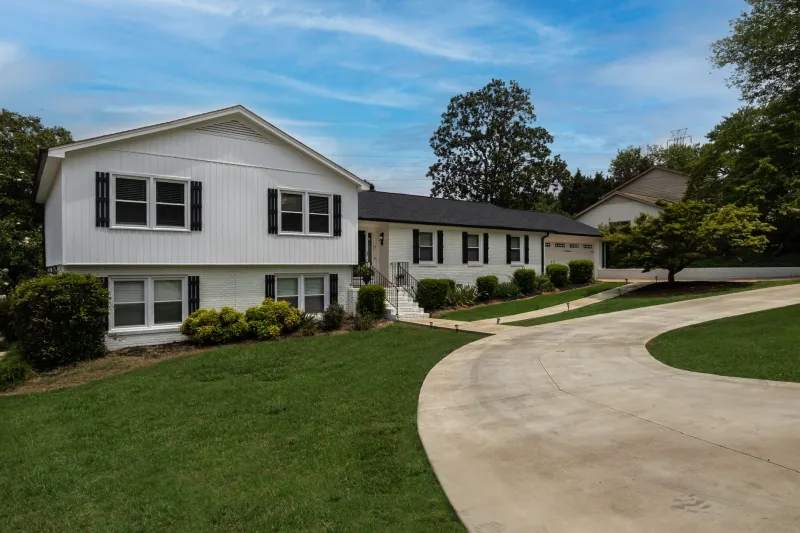
The first is investor-driven upgrading. As institutional and individual investors swept into residential markets following the 2008 financial crisis, many targeted precisely the type of modest, functional homes that first-time buyers have historically depended upon. Purchased at scale, renovated to premium specifications, and repositioned as luxury rentals or high-margin resale properties, these homes were effectively extracted from the attainable tier of the market and repriced beyond the reach of the buyers they once served. A three-bedroom ranch in a working-class suburb of Atlanta or Phoenix that might have sold for $260,000 in 2018 was, in many cases, acquired, renovated, and relisted at $420,000 — or converted into a rental yielding returns that made resale to an owner-occupant financially unappealing.
The second force is the quiet deterioration of aging stock. A significant portion of America's existing mid-tier inventory was built in the postwar decades of the 1950s through the 1970s. Much of it has aged without adequate reinvestment, and as deferred maintenance accumulates, these properties drift either into uninhabitability or into renovation projects too costly for first-time buyers to absorb. The homes do not disappear from the map, but they disappear from the practical inventory of move-in-ready, mortgage-eligible properties.
The third — and arguably most structurally entrenched — force is zoning. Across the majority of American municipalities, land-use regulations effectively prohibit the construction of new housing at modest price points. Minimum lot sizes, parking requirements, setback mandates, and single-family-only zoning combine to ensure that any new residential development must be priced at the upper end of the market simply to cover land and compliance costs. Builders are not withholding affordable product out of indifference; they are responding rationally to a regulatory environment that makes mid-tier construction economically non-viable in most jurisdictions.
A Generation Stranded on the Rental Treadmill
The human cost of this hollowing-out is most visible in the demographic profile of American renters. The share of households aged 30 to 44 who rent rather than own has risen substantially over the past fifteen years, reversing a long-standing trend toward earlier homeownership. Many of these households are not renting by preference. They are renting because the inventory of homes they could realistically afford to purchase has shrunk to near-invisibility in the markets where they live and work.
The implications extend well beyond housing. Homeownership has historically served as the primary vehicle through which American middle-class households accumulate intergenerational wealth. A family that cannot access ownership in their thirties does not simply delay wealth-building — in many cases, they forfeit it entirely. Equity that might have compounded over twenty years of ownership instead accrues to a landlord. The rental treadmill, once a temporary condition, has for many become a permanent economic state.
This dynamic is particularly acute in Sun Belt metros, mid-sized Midwestern cities, and the outer suburbs of major coastal markets — precisely the geographies where mid-tier housing once existed in relative abundance and where young families have historically sought affordable entry points.
What Builders Are Attempting
The construction industry has not been entirely passive in the face of this crisis, though its responses remain constrained by the same economic realities that created the problem.
Modular and factory-built construction has emerged as one of the more promising mechanisms for reducing the cost of producing new homes at attainable price points. By shifting a significant portion of the building process off-site into controlled manufacturing environments, modular builders can compress construction timelines, reduce labor costs, and achieve a degree of price predictability that site-built construction cannot match. Companies operating in this space have demonstrated the capacity to deliver finished homes in the $180,000 to $320,000 range in markets where comparable site-built product would cost considerably more — though land acquisition and local permitting remain persistent cost drivers that technology alone cannot resolve.
3D-printed construction, while still operating at relatively modest scale, has attracted serious investment and is beginning to produce completed homes in several states. Firms such as ICON, based in Austin, Texas, have demonstrated that printed structures can be delivered at speeds and costs that challenge conventional building economics, with particular relevance for entry-level and workforce housing applications.
Smaller-footprint design — the deliberate embrace of compact, efficiently planned homes in the 900 to 1,400 square foot range — is also gaining renewed attention among builders willing to recalibrate their product mix away from the larger homes that have dominated new construction for decades. The challenge is that in many jurisdictions, zoning minimums and market expectations create resistance to smaller-scale product even where demand for it is demonstrably strong.
The Policy Frontier: Missing Middle Zoning Reform
On the regulatory side, the concept of "missing middle" zoning reform has moved from academic discourse into active legislative consideration in a growing number of states and cities. The term refers to the range of housing typologies — duplexes, triplexes, townhomes, courtyard apartments, and small multifamily buildings — that once populated American neighborhoods organically but were largely prohibited by mid-century single-family zoning codes.
Minnesota became one of the first states to enact statewide legislation legalizing duplexes and small multifamily buildings on formerly single-family-zoned land. Montana, Montana, and several other states have followed with various forms of zoning liberalization aimed at expanding the supply of modestly priced housing. California's ongoing series of accessory dwelling unit reforms, while imperfect, have produced measurable increases in housing supply in dense urban markets.
These reforms are necessary but not sufficient. Zoning liberalization creates the legal permission for mid-tier housing; it does not, by itself, guarantee that such housing will be built at scale or at prices that genuinely attainable buyers can reach. The interaction between land costs, construction financing, and local permitting processes means that even liberalized zoning environments can produce housing that skews toward the upper end of what the market will bear.
Rebuilding the Rungs
The disappearance of mid-tier housing stock is, at its core, a story about the gradual dismantling of economic mobility infrastructure. The property ladder was never merely a metaphor — it was a functional mechanism through which ordinary households converted shelter expenditure into lasting financial security. Its erosion has consequences that compound across generations and communities.
Rebuilding it will require simultaneous action across multiple dimensions: zoning frameworks that permit a genuinely diverse range of housing typologies, construction methodologies that reduce the cost of producing modest new homes, financing structures that make modest homeownership accessible to households currently priced out of the market, and investment frameworks that prioritize the preservation and rehabilitation of existing mid-tier stock rather than its systematic upgrading out of reach.
None of these solutions is simple, and none will deliver results quickly. But the alternative — a housing market permanently bifurcated between high-end ownership and mass rentership, with no functional middle — carries economic and social costs that dwarf the difficulty of the reforms required to prevent it. The evolution of American real estate depends, in no small part, on whether the nation can summon the political and economic will to rebuild what it has allowed to disappear.