Digging Deeper: How America's Cities Are Turning Underground Space Into Real Estate's Next Vertical Frontier
The history of American urban development has been written almost exclusively in the vertical dimension above grade. Skylines are the visual language of real estate ambition; floor plates stacked toward the sky are how density is measured, how land value is extracted, and how urban identity is projected. The ground itself has functioned primarily as a platform — a surface from which towers rise and to which residents and workers eventually descend.
That conception of urban space is beginning to change, driven by a convergence of pressures that are making the territory beneath city streets look less like an engineering obstacle and more like an underutilized asset. Across a handful of American cities, developers, municipal planners, and technology firms are exploring — and in some cases actively executing — projects that treat subterranean space as a genuine real estate resource, subject to the same calculus of density, yield, and long-term value creation that governs development above ground.
The implications for urban property markets, if this movement achieves meaningful scale, are genuinely transformative.
Why Underground, and Why Now
The case for subterranean development is not new. Cities from Montreal to Singapore to Helsinki have maintained extensive underground networks for decades, encompassing retail, transit, pedestrian circulation, and in some cases residential and commercial space. American cities, by contrast, have largely confined their underground investments to utilities, transit infrastructure, and parking — functional necessities rather than activated real estate.
Several forces are converging to change this calculus in the current moment. The most immediate is the intensifying pressure on surface-level urban land in gateway markets. In cities like New York, Boston, San Francisco, and Chicago, the cost of developable surface land has reached levels that make even structurally complex underground development financially competitive for certain use cases. When the alternative is paying $500 per square foot for a surface site in a constrained urban market, the economics of excavation begin to look more attractive.
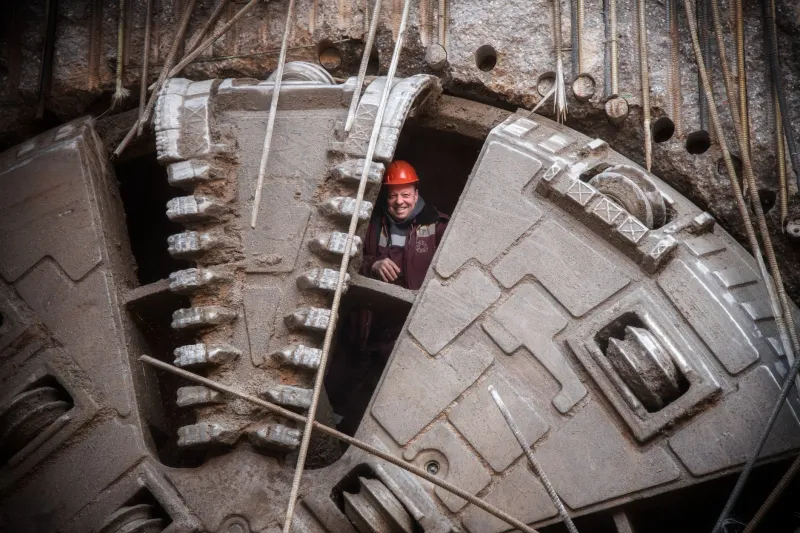
Simultaneously, advances in tunneling and underground construction technology — many of them driven by the expansion of urban transit systems and, more recently, by private ventures in underground logistics and transportation — have materially reduced the cost and risk profile of below-grade construction. Automated tunneling machinery, improved ground-penetrating sensing technology, and advances in underground ventilation and environmental control systems have collectively expanded the range of viable underground applications while compressing construction timelines.
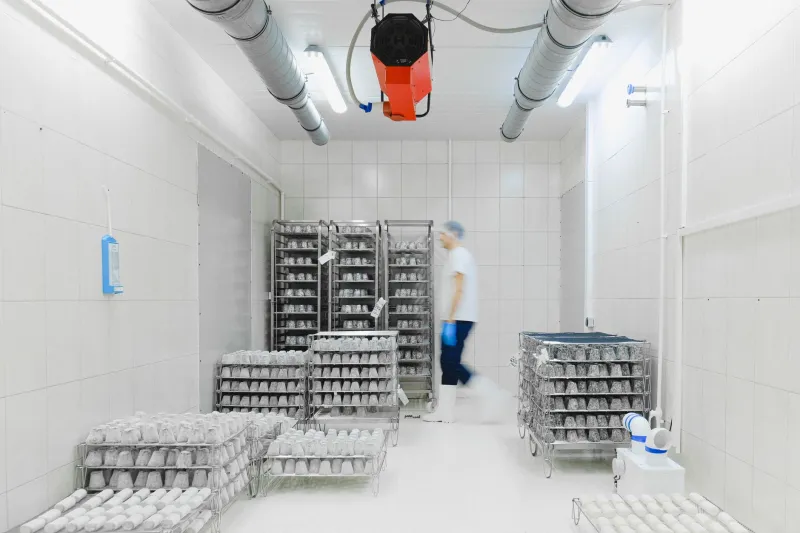
Climate pressure is providing a third vector of motivation. Surface-level urban environments are becoming increasingly hostile — subject to extreme heat events, flooding, and wildfire smoke intrusion — in ways that make climate-controlled underground space attractive for certain occupancy types. Data centers, pharmaceutical cold storage, archival facilities, and even certain categories of food production are all use cases where stable subterranean temperature profiles and immunity from surface weather events represent genuine operational advantages.
The Use Cases Gaining Traction
Not all underground real estate applications are equally mature, and the development community is learning to distinguish between use cases that are commercially viable today and those that remain aspirational.
Data centers represent perhaps the most immediately compelling subterranean application. The operational requirements of hyperscale computing infrastructure — stable temperature, controlled humidity, protection from electromagnetic interference, and insulation from surface-level physical risks — align naturally with underground environments. Several projects in the United States and Europe have demonstrated that purpose-built underground data facilities can achieve power usage effectiveness ratings that compare favorably with surface-level alternatives, while offering security and resilience characteristics that are increasingly valued by enterprise and government clients.
Underground retail and hospitality is a more complex proposition, but not an absent one. The Shops at Hudson Yards in New York, while not subterranean, demonstrated that American consumers can be drawn to retail environments that depart from conventional street-level configurations. In cities with established underground pedestrian networks — Minneapolis's Skyway system, for instance, though it operates above grade — the behavioral precedent for enclosed, climate-controlled commercial circulation is well established. The challenge for true underground retail is natural light, a variable that innovative architectural approaches using fiber optic light distribution and dynamic artificial lighting systems are beginning to address.
Residential underground development remains the most technically and culturally challenging frontier. The psychological and regulatory barriers to habitable below-grade residential units in the United States are substantial — building codes in most jurisdictions impose strict limitations on below-grade habitation, and consumer acceptance of windowless or light-constrained residential environments is limited outside of specific high-density contexts. However, hybrid configurations — residential towers with below-grade amenity levels, fitness facilities, co-working spaces, and social infrastructure — are already common, and represent a pragmatic stepping stone toward more ambitious subterranean residential programming.
The Regulatory Terrain
Perhaps the most significant barrier to subterranean real estate development in the United States is not technological but legal. American property law has historically treated subsurface rights as an adjunct to surface ownership, governed by the common law principle that a landowner's rights extend from the surface downward to the center of the earth. In practice, this principle has been substantially qualified by utility easements, transit authority rights, and municipal infrastructure claims — but the framework for actively trading, leasing, and developing subsurface rights as a distinct real estate asset class remains underdeveloped.
Some jurisdictions are beginning to address this gap. New York City's experience with air rights transfers — a market that has generated billions of dollars in transactions and effectively created a new asset class from previously invisible development capacity — offers a conceptual template for how subsurface rights could be structured as a tradeable commodity. Several municipal governments have commissioned legal studies examining the feasibility of subsurface rights frameworks analogous to the transferable development rights systems that govern air rights transactions.
The regulatory dimension extends beyond property rights to building codes, environmental compliance, and emergency egress requirements — all of which present genuine complexity for underground development. Cities that aspire to lead in this space will need to invest in regulatory modernization that keeps pace with technological capability, a coordination challenge that has historically proven difficult in American municipal governance.
Density Arithmetic and Property Value Implications
For real estate investors and analysts, the most consequential question about underground development is how it affects the density calculus and, ultimately, the valuation of urban land.
In markets where floor area ratio calculations are the primary constraint on development value, the ability to activate subterranean space — whether or not it counts against above-grade FAR limits — represents a meaningful expansion of value extraction potential. A mixed-use development that incorporates two or three below-grade floors of activated commercial or data center space effectively increases the income-generating capacity of a given land parcel without necessarily consuming additional above-grade development rights.
This dynamic has not yet been systematically priced into urban land markets, in part because the regulatory frameworks that would enable it remain nascent. But as those frameworks evolve, the sites best positioned to capture subterranean value — those with favorable geology, proximity to utility infrastructure, and ownership structures that permit below-grade development — may command premiums that current valuations do not reflect.
The Long View
Subterranean real estate development is not a near-term solution to American urban density challenges — the regulatory, financial, and cultural barriers are too substantial for rapid widespread adoption. What it represents, more accurately, is an emerging frontier that deserves serious analytical attention from investors and developers who take a long view of urban property markets.
The cities that invest now in the legal frameworks, technical standards, and infrastructure mapping required to activate their subterranean real estate potential are positioning themselves to capture a category of value that most of their competitors have not yet begun to consider. In a market where every above-grade opportunity is contested and priced accordingly, the willingness to look downward may prove to be one of the more consequential strategic differentiators of the coming decade.