Volts and Values: Why America's Crumbling Power Grid Is Quietly Becoming a Property Market Time Bomb
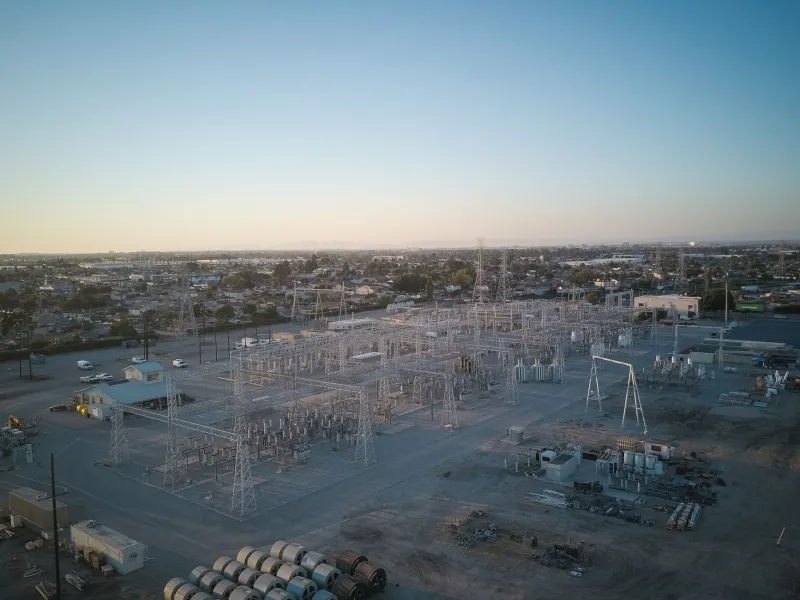
Volts and Values: Why America's Crumbling Power Grid Is Quietly Becoming a Property Market Time Bomb
For generations, the American homebuyer's mental checklist has remained remarkably consistent: roof condition, foundation integrity, school district ratings, proximity to transit. Electrical infrastructure — not the wiring inside the walls, but the broader grid that feeds the property — has almost never appeared on that list. That oversight is becoming increasingly costly.
Across the United States, the electrical grid underpinning millions of residential neighborhoods and commercial districts was largely constructed between the 1950s and 1980s. The American Society of Civil Engineers has persistently graded the nation's energy infrastructure with a near-failing score, and the consequences of that neglect are beginning to surface in ways that real estate markets are only beginning to price in.
A Grid Designed for a Different Era
The electrical demands placed on American infrastructure today bear almost no resemblance to the loads those systems were engineered to handle. When the transformers serving a typical suburban subdivision were installed, the average household drew power for lights, a refrigerator, a television, and perhaps a window air-conditioning unit. Today, that same household may be charging two electric vehicles overnight, running a heat pump, powering a home office, and feeding energy back through rooftop solar panels — all simultaneously.
Utility-scale demand growth is compounding the residential surge. The explosion of artificial intelligence has driven an unprecedented buildout of data centers across the American Sun Belt, Mid-Atlantic corridor, and Pacific Northwest. These facilities consume staggering quantities of electricity, and their appetite is accelerating. The result is a system under pressure from multiple directions at once, with upgrades proceeding far more slowly than demand requires.
The Department of Energy has estimated that the United States needs to add or replace roughly 100 gigawatts of transmission capacity by 2035 to support clean energy goals alone. That figure does not fully account for the distribution-level infrastructure — the substations, transformers, and secondary lines — that actually deliver power to individual properties.
The Property Value Dimension
What makes this an acutely real estate concern, rather than merely an energy policy discussion, is the growing divergence between grid-resilient communities and those sitting on antiquated infrastructure.
In markets where utilities have invested in modernized substations, smart grid technology, and upgraded transmission corridors, properties are demonstrating a measurable capacity premium. Developers in these zones can build higher-density housing, install EV charging infrastructure, and market electrification-ready homes with confidence. Commercial tenants — particularly in the technology, healthcare, and manufacturing sectors — are increasingly prioritizing power reliability in their site selection decisions, driving occupancy and lease rates in well-served markets.
Conversely, properties in underserved grid territories are quietly accumulating liability. Repeated outages suppress desirability. Capacity constraints limit what buyers can do with a property — a prospective purchaser hoping to install a Level 2 EV charger or upgrade to an all-electric kitchen may discover that the local transformer serving their block simply cannot accommodate the additional load without costly utility-side upgrades. In some cases, those upgrades come with multi-year wait times.
Insurance markets are beginning to take notice as well. Power fluctuations and grid-related failures contribute to appliance damage, HVAC system degradation, and, in extreme cases, electrical fires. Underwriters in high-outage-frequency territories are quietly adjusting their risk models, a pattern that echoes the insurance repricing dynamic already underway in climate-exposed coastal and wildfire markets.
What Investors and Buyers Should Be Examining
The challenge for market participants is that grid infrastructure data is not standardized, not easily accessible, and rarely surfaced during a conventional property transaction. Unlike a home inspection, which produces a tangible report on physical systems within the property boundary, the electrical ecosystem beyond the meter remains largely opaque.
Several data points, however, are beginning to attract the attention of sophisticated buyers and their advisors.
Substation age and capacity utilization are increasingly available through utility filings and state public utility commission records. Properties served by substations operating near or above rated capacity face a meaningfully higher risk of service degradation as demand grows.
Outage frequency and duration metrics, reported through the U.S. Energy Information Administration's annual electric power surveys, offer a reasonably reliable proxy for grid reliability at the utility and regional level. Markets with persistently high outage rates warrant heightened scrutiny.
Interconnection queue status has become a relevant indicator for commercial and industrial properties. The backlog of projects awaiting grid connection approval — now exceeding 2,000 gigawatts nationally, according to Lawrence Berkeley National Laboratory — signals where grid capacity constraints are most acute, and by extension, which markets face the greatest constraints on electrification-driven development.
Utility capital investment plans, filed with state regulators and often publicly accessible, reveal which service territories have committed to meaningful infrastructure upgrades and which are deferring investment. A utility actively deploying smart grid technology and replacing aging transformers represents a meaningfully different risk environment than one carrying decades of deferred maintenance.
The Disclosure Frontier
The logical endpoint of this trajectory is a formal expansion of property disclosure requirements. Several states have already moved to mandate disclosure of flood zone status, wildfire risk, and proximity to environmental hazards. Electrical infrastructure vulnerability presents a structurally similar case: it is a material condition affecting property utility, insurability, and long-term value that buyers currently have no reliable mechanism to evaluate.
Advocates within the real estate technology sector are actively developing tools to surface grid-related risk data in a format accessible to non-specialist buyers. Platforms that aggregate utility reliability data, substation capacity information, and electrification readiness scores at the parcel or neighborhood level are already in development, and several are approaching commercial availability. The eventual integration of such data into standard listing platforms would represent a meaningful evolution in how American real estate transactions account for infrastructure risk.
Legislative momentum, while slow, is beginning to build. The Inflation Reduction Act directed substantial funding toward grid modernization, and several states have introduced or enacted legislation requiring utilities to accelerate distribution infrastructure upgrades. The pace of policy change, however, lags considerably behind the pace of demand growth.
A Liability the Market Has Yet to Fully Price
Real estate markets are efficient over time, but they are rarely efficient in real time. The pattern that has played out across flood risk, wildfire exposure, and water infrastructure deterioration — where risk accumulates quietly until a threshold event forces rapid repricing — appears to be forming again in the electrical infrastructure domain.
The buyers and investors who recognize this dynamic early will be positioned to avoid acquiring properties whose grid vulnerabilities are not yet reflected in asking prices, and to identify the grid-resilient communities where electrification-driven demand premiums are likely to compound over the coming decade.
The American electrical grid is not merely an energy policy concern. It is, increasingly, a real estate one — and the market is only beginning to catch up.